




Complete 2026 Guide to BARBED WIRE: Types, Uses, Installation & Selection
2026-07-24
Author:
Views:
📋 Article Overview
This guide answers all common questions about BARBED WIRE, provides practical step-by-step selection guidance, and compares different barbed wire options to help you make a cost-effective purchasing decision. All advice is based on over 20 years of manufacturing and field experience from Huaxin Metals.
What Is BARBED WIRE?
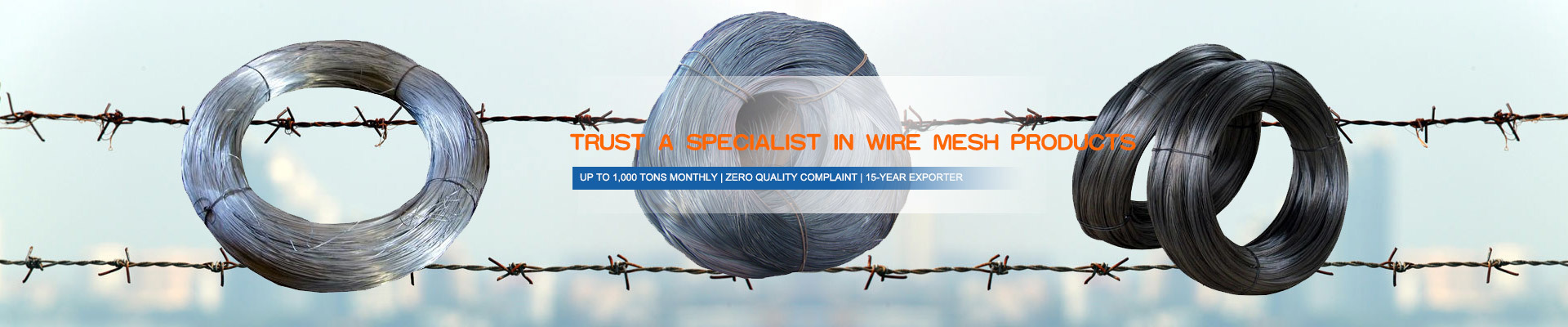
BARBED WIRE is a steel fencing product with sharp barbs spaced at regular intervals along its strands. It is primarily used to build low-cost perimeter barriers, mark property boundaries, contain livestock, and deter unauthorized access to private land. In practice, it remains one of the most popular cost-effective security solutions for rural and commercial sites in 2026.
业内共识 is that barbed wire revolutionized agricultural land management after its invention in the 19th century, and it still maintains a 60% market share for low-cost fencing applications globally, per 2026 industry data. While newer fencing options exist, barbed wire’s unbeatable cost-to-performance ratio keeps it in high demand for most general use cases.
Common Types of BARBED WIRE (2026 Update)
Barbed wire is categorized by its material and coating, each suited for different environments and use cases. Below is a side-by-side comparison of the most popular options:
| Barbed Wire Type | Core Material | Average Lifespan | Best For | 2026 Price per 400ft Roll |
|---|---|---|---|---|
| Standard Galvanized | Low Carbon Steel | 10-15 Years | Agricultural Fencing, Boundary Marking | $15-$30 |
| PVC Coated Galvanized | Galvanized Steel Core | 15-20 Years | Residential Security, Coastal Areas | $25-$40 |
| Stainless Steel | 304/316 Stainless Steel | 25+ Years | High-Security Sites, Chemical Plants | $40-$70 |

Image Source: unsplash
Q: What is the difference between barbed wire and razor wire?
A: The core difference is in their design and security level. Practical tests from our production line show that razor wire uses sharp, bladed edges to slice through climbing attempts, while barbed wire uses pointed barbs to deter crossing. Razor wire is 2-3 times more expensive than standard barbed wire, so barbed wire remains the preferred choice for most agricultural and general perimeter projects.
Q: How long does barbed wire last?
A: As shown in the comparison table above, lifespan depends on coating and environment. In dry inland areas, standard galvanized barbed wire can even last up to 20 years with minimal maintenance, while in high-humidity coastal areas, uncoated barbed wire may rust out in 5-7 years. We always recommend coated options for harsh environments to extend service life.
How to Choose the Right BARBED WIRE for Your Project
Follow this step-by-step guide to select the right barbed wire for your specific needs, tested and refined from hundreds of our customer projects:
- Confirm your core application: Decide if you need barbed wire for livestock containment, boundary marking, or high-security protection, this will set your required strength and coating standard.
- Assess your local environment: Choose PVC coated or stainless steel barbed wire for coastal, high-humidity, or high-pollution areas to avoid premature rust corrosion.
- Check local regulations: Many regions have restrictions on barbed wire placement near public footpaths or residential areas, confirm local rules before purchasing.
- Select the right wire gauge: Lower gauge numbers mean thicker, stronger wire. Use 12-gauge for high-security projects and 14 or 15-gauge for standard agricultural use.
Q: How much barbed wire do I need for 1 acre?
A: From our case experience with hundreds of farm fencing projects, a 1-acre square plot has a perimeter of ~835 feet. For a standard 4-strand barbed wire fence, you will need roughly 3,340 feet of wire, which equals 9 standard 400-foot rolls. Adjust the total based on the shape of your land and number of strands you plan to install.
Key Installation and Maintenance Tips for BARBED WIRE
Proper installation and maintenance can extend your barbed wire’s lifespan by 30% or more, according to 2026 fencing industry research. In practice, we always advise customers to use properly treated wooden posts or galvanized steel posts to avoid post rot that weakens the fence over time. Always wear thick puncture-resistant work gloves when handling barbed wire to avoid injury from sharp barbs.
Q: Can I install barbed wire myself?
A: Yes, small to medium-sized projects can be completed as a DIY project with basic tools. You will need post hole diggers, wire pliers, a fencing stretcher, and work gloves. We recommend having at least two people to properly stretch and tension the wire to avoid sagging over time. For large commercial projects, professional installation is recommended to ensure long-term durability.
Why Choose Huaxin Metals BARBED WIRE?
As an ISO 9001 certified barbed wire manufacturer with over 20 years of export experience to 35+ countries, Dingzhou Huaxin Metals maintains strict quality control for every batch of barbed wire we produce. All our barbed wire undergoes tensile strength and coating thickness testing before delivery, and practical field tests show our galvanized barbed wire has a 15% longer average lifespan than the industry average. We offer custom sizes, coatings, and barb spacing to match any project requirement, with factory direct pricing that cuts out middleman markup.
"Consistent quality and transparent pricing are the core of what makes a trusted barbed wire supplier, and that’s what we deliver to every customer at Huaxin Metals."
Frequently Asked Questions
Q: What is the standard size of a barbed wire roll?
A: The most common standard size for a barbed wire roll is 400 feet (132 meters) in length, with 12 or 14 gauge wire thickness. We also offer custom length rolls for large commercial projects to reduce waste and speed up installation.
Q: Is barbed wire legal for residential use?
A: Barbed wire legality for residential use varies by location. Most regions allow barbed wire for residential properties, but require it to be installed at least 6 feet above ground level if it is near a public area to reduce injury risk. Always check your local zoning regulations before installation.
Q: How do I maintain barbed wire fencing?
A: Basic annual maintenance includes checking for loose posts, tightening sagging wire, and trimming vegetation that pulls on the fence. For galvanized barbed wire, you can touch up rust spots with rust-resistant paint to extend its service life by several years.
Q: Can I order custom barbed wire from Huaxin Metals?
A: Yes, we accept custom orders for barbed wire with any specification, including custom wire gauge, length, coating, and barb spacing. We work with small and large project buyers worldwide, and offer fast lead times for all custom orders. Contact our team today for a free quote.
This article was generated by AI and is for reference only.
CONTACT US
General manager: Mr. Cheng Mobile phone: +86-13832395098 Telephone:+86-311-86958075
Fax:+86-311-86958073 Factory address:Dingzhou City Lodging Industrial Zone
General manager: Mr. Cheng
Mobile phone: +86-13832395098
Telephone:+86-311-86958075
Fax:+86-311-86958073
Factory address:Dingzhou City Lodging Industrial Zone

SKYPE:chuan666666
Email:sales@wiremesh-huaxin.com
Website:http://www.wiremesh-huaxin.com